
Which Construction Projects Require BIM in Kazakhstan?
The use of building information modeling (BIM) is becoming mandatory in Kazakhstan. Under the Minister of Industry and Construction’s order dated March 19, 2026, new requirements take effect on August 1…
By an order of the Minister of Industry and Construction dated March 19, 2026, Kazakhstan approved a list of construction project types for which building information modeling is mandatory during construction and operation.
The list includes:
from August 1, 2026:
- general education school buildings (including gymnasiums and lyceums) with a capacity of 600 students or more;
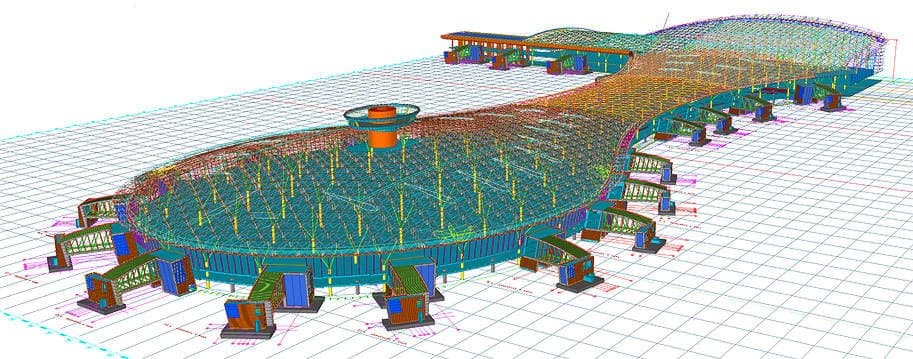
- airports, airport passenger terminals, and other aviation infrastructure facilities;
- railway and road tunnels and metro systems;
- bridge structures 100 m or longer on roads of all categories;
- unique construction facilities.
from January 1, 2028:
- preschool education facilities with 95 places or more;
- dormitory buildings of boarding schools and children's summer camps with capacity for more than 100 children;
- higher and specialized secondary education complexes (campuses excluding standalone sports complexes, catering blocks, residential areas, and dormitory buildings);
- residential and mixed-use buildings of 6 stories or more (excluding the upper technical floor);
- administrative, service, and public buildings and structures of 3 stories or more (excluding the upper technical floor);
- residential and civil gas distribution facilities with pressure above 0.3 MPa;
- class I, II, III, and IV trunk oil and petroleum product pipelines;
- trunk water supply and wastewater networks and associated facilities, water and wastewater treatment plants, pumping stations, and water intakes with capacity of 1000 m3/day or more;
- trunk and distribution (within-block) district heating networks with a nominal internal diameter exceeding 320 mm (inclusive) and associated facilities;
- museums of national significance, state archives, and repositories of national and cultural treasures requiring special artificial climate control and security measures;
- railway stations, bus terminals, and sea and river passenger terminals;
- indoor or outdoor sports, entertainment, and religious facilities with simultaneous capacity for 150 people or more;
- healthcare facilities and medical and preventive care institutions;
- electricity supply facilities, including substations, switchgear, overhead and cable power lines, and supply centers;
- power plants of all types, including thermal, hydroelectric, solar, wind, and other electricity generation facilities;
- oil and gas facilities, including extraction, gathering, processing, transportation, refining, and storage, as well as liquefied natural gas facilities;
- category I and II roads and their associated structures;
- class I and II hydraulic engineering structures;
- mainline railways;
- thermal power facilities and structures with capacity of 150 MW or more;
- power transmission lines and other electric grid facilities with voltage of 110 kV or more.
from January 1, 2030:
- all types of construction projects except those in the third level of responsibility.
The Order takes effect on July 1, 2026.
Implement BIM Without Risks or Schedule Delays
Our experience enables us to support you at every stage, from preparing a step-by-step roadmap to assisting with active commercial projects. We will help your specialists learn building information modeling while working alongside us on a real commercial project.