
From Landscapes to Reverse Engineering: Choosing a 3D Scanner
Choosing the right solution can be difficult. We prepared a checklist covering technical specifications and practical considerations to help you select a device that meets your needs.
We understand how difficult it can be to find the right solution. That is why we prepared a checklist covering everything from technical specifications to practical considerations to help you choose a device that meets your needs.
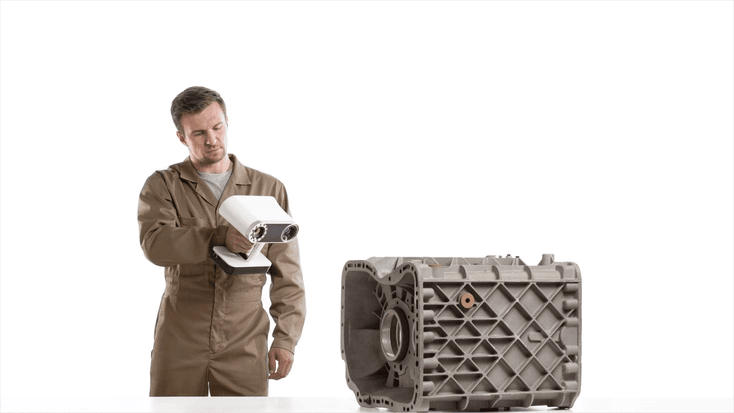
For those using the technology for the first time, 3D scanning can seem like a minefield. A poor choice may leave you with an expensive, hard-to-learn device that ultimately sits unused. Paradoxically, the wide range of options can make upgrading even harder.
Consider 3D scanning: the market is full of advanced technologies, and there is no single solution for every situation. The key is to choose an approach that actually meets your requirements.
For example, if you only need a visually realistic avatar without precise geometry, you might not need a professional scanner. But only devices using structured light, blue light, or LiDAR can produce the accurate digital copies needed for engineering tasks.
Where should you start? The best approach is to ask, "What exactly do I need a 3D scanner for?" Then select the technology based on the task.
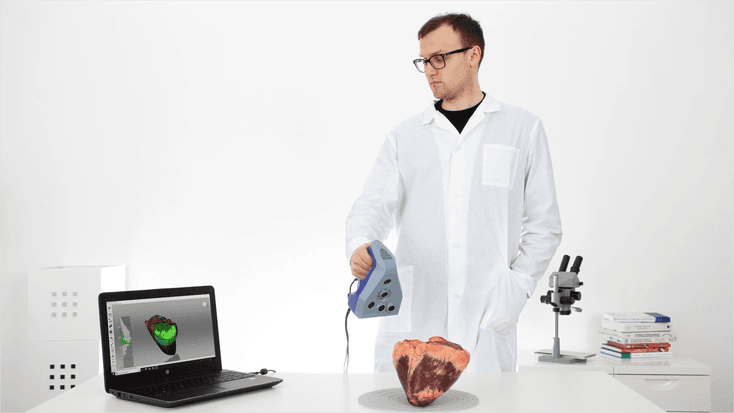
Key Takeaway
Do not choose a 3D scanner based only on specifications. Consider your actual tasks to make the right choice.
Start by carefully reviewing your project's requirements. If your team already includes experienced 3D scanning specialists, they can learn complex systems quickly. Without that experience, ease of use becomes critical.
The next important factors are:
- Accuracy—essential for reverse engineering and inspection.
Speed—for completing projects quickly.
Versatility—for operating in confined spaces.
Resolution—if photorealistic 3D models are required.
Do not forget scale: it varies dramatically across industries. In construction, engineers scan huge structures and sites, while in jewelry and dentistry, maximum accuracy matters more than range. The best results come from considering all these factors. Let's explore how to do that in practice.
Environmental Conditions
Before making fundamental decisions, such as which scanning technology to use, consider where you will work. Digitizing complex objects often requires a versatile scanner, while remote locations call for long battery life and spare batteries.
Indoor and outdoor scanning differ significantly. Outdoors, lighting and humidity affect results. Long, large-scale projects often require stationary solutions. In extreme temperatures, scanners can overheat or lose accuracy, so they should be protected from direct sunlight and contamination.
Range
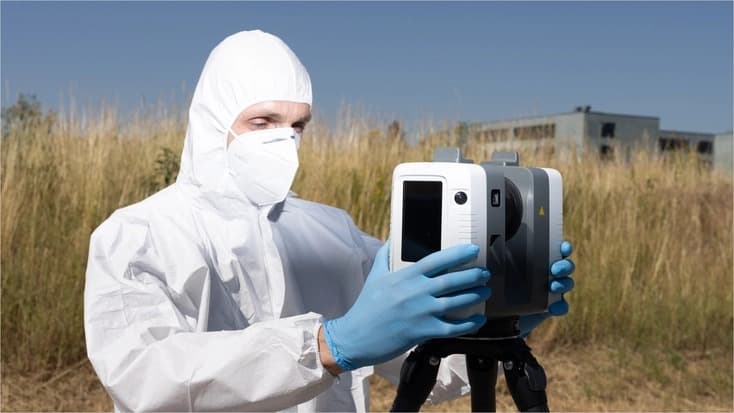
Modern 3D scanning can digitize everything from tiny objects with microscopic details to entire buildings and landscapes. The important thing is to determine where your task falls in that range, because greater scanning distance often comes at the expense of accuracy.
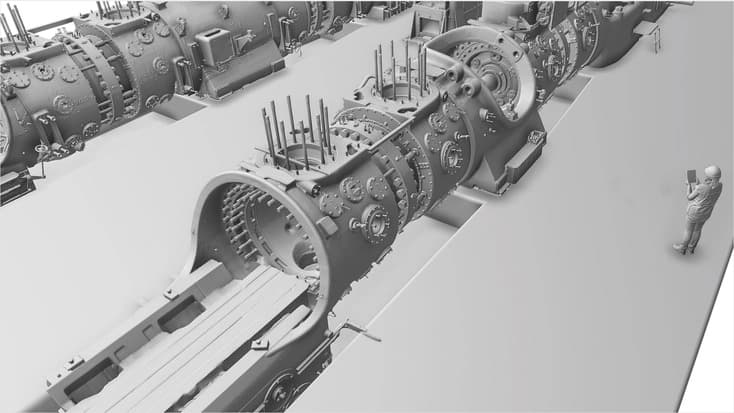
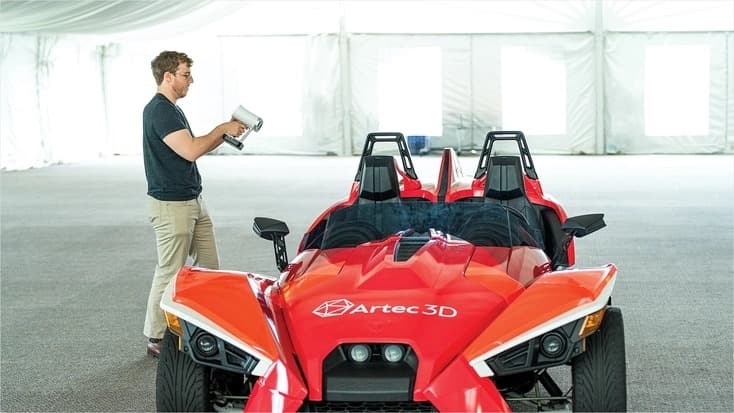
For large objects such as aircraft, trains, or cars, long-range LiDAR devices such as Artec Ray II are a strong choice. Small objects such as circuit boards or compressors are better suited to maneuverable handheld scanners designed to capture detail in hard-to-reach areas.
Speed and field of view also matter. The more points a scanner captures per second, the faster digitization proceeds. A wide field of view improves tracking and captures more data in one pass, but it also creates large datasets that take longer to process. It is a trade-off.
Finally, consider coverage—the ability to handle line-of-sight limitations such as deep holes and sharp undercuts. Flexible handheld structured-light scanners are especially effective in these situations.
Ease of Use
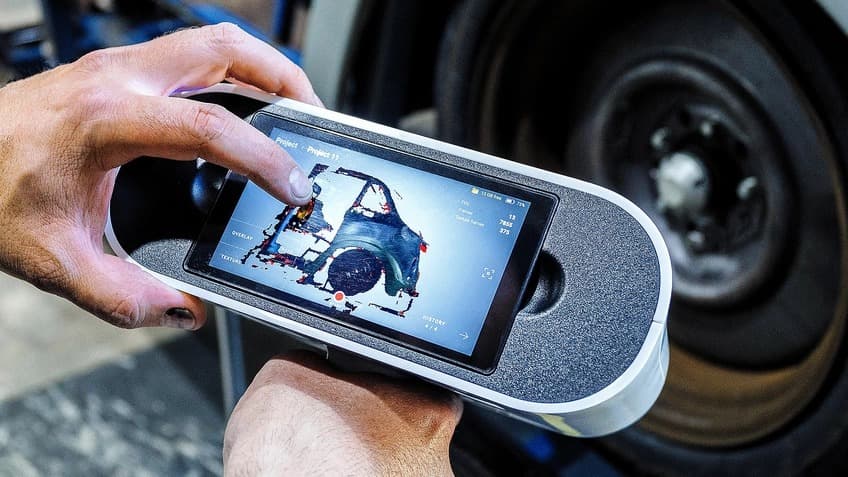
Many professional 3D scanners are available today, but some are much easier to use than others. To get results quickly, consider a lightweight, versatile, wireless device such as Artec Leo. Unlike wired scanners that require targets and prior calibration, Leo is ready to use immediately and simplifies the process significantly.
Accessories are another consideration. If your scanner is not wireless, you may need to carry a laptop or PC during scanning. Compact and portable systems make the workflow much faster and more convenient.
Capture and processing software is equally important. For beginners, converting scan data into meshes and CAD models is often the hardest part of the process. It is therefore best to choose platforms that automatically apply appropriate processing algorithms.
For frame rate and tracking, professional devices offer excellent performance. Cheaper alternatives may look attractive, but productivity and time savings often make professional 3D scanners a better long-term value.
Artec Leo is a versatile tool for both large housing components and small features such as gears and threads. For engineers, that means fewer calibration problems, faster results, and data that can be integrated immediately into CAD/CAM processes.
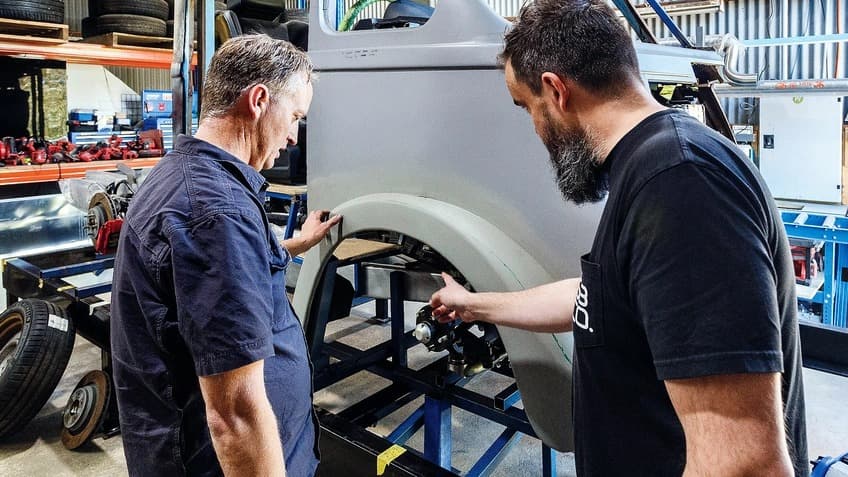
We have a separate article showing how Artec Leo helped restore a legendary 1957 International Metro van with a Hellcat engine.
Accuracy
Handheld 3D scanners are often advertised with accuracy of 0.1 mm or better. But what does that mean in practice? Accuracy describes how closely the digital model matches the real object—specifically, how close its dimensions are to the original. When scan data are used to make engineering decisions, submillimeter accuracy is critical.
This is especially important in reverse engineering and inspection, where acceptable deviations are small. Accurate data are essential for digitizing parts that must fit and function after reproduction and for reducing uncertainty in analysis, a key task for quality control engineers.
Target-based scanners can provide excellent accuracy but often do not capture texture. Structured-light scanners have an advantage here: they capture both geometry and texture.
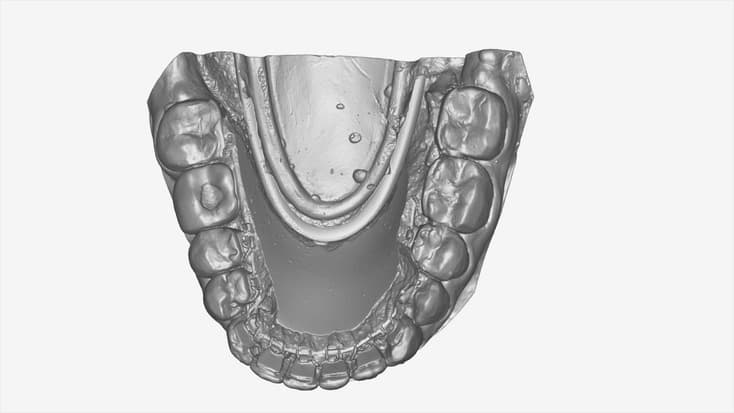
Accuracy is just as important for inventory management and healthcare. Replacement parts will not work in an assembly if measured incorrectly. Custom medical devices based on 3D scans must fit patients properly or they will not be usable.
For miniature medical or dental devices, Artec Micro II provides accuracy down to 5 microns. Versatile handheld scanners such as Artec Eva are widely used in medicine. Eva offers 0.1 mm accuracy, which is more than sufficient for scanning patient limbs, a common application today.
In mechanical engineering, a 3D scanner must capture tiny details without distortion. Even minor deviations can affect mechanical performance: worn gear teeth, thread geometry, and mating surfaces all require highly accurate digitization. Artec Leo performs well in these tasks. Its wireless design and high capture speed help engineers collect accurate data quickly for immediate analysis and reverse engineering.
Digital models created with Leo can be used not only to reproduce parts but also to adapt them to new operating conditions, making reverse engineering easier and more reliable.
The required level of accuracy therefore depends directly on the intended application.
Resolution
Now let's discuss resolution. Although it affects overall accuracy, these two factors should not be confused. Resolution relates more to the minimum spacing between captured points and the ability to record fine surface details than to geometric accuracy. For animation, VR, forensics, and jewelry, resolution is often the priority.
High resolution produces larger datasets that take longer to process, especially on less powerful PCs. 3D printers also take longer to print such models, and some cannot handle very fine detail. Keep this in mind when scanning objects for additive manufacturing.
For maximum scan quality, consider blue-light devices such as Artec Space Spider. Photogrammetry can also deliver fine detail, but often with lower accuracy, limiting its use in metrology.
Speed
Time is money. For most professional users, speed is a critical factor. Many popular 3D scanners use structured light, which captures millions of points per second. Scanner speed is also measured in frames per second (FPS), with higher values generally being better.
Performance depends on the technology. For example, white-light 3D scanners can capture 2 million points per second at up to 16 FPS. Top VCSEL devices can collect twice as many points at 80 FPS in the same time.
If you regularly scan large volumes of data, a professional high-speed scanner can save time and money while improving productivity. Fast capture is especially important when scanning moving subjects, such as people.
Software
It is easy to get caught up comparing specifications, but the real key to successful 3D scanning lies in the software. Processing data quickly and turning it into high-quality results requires advanced algorithms.
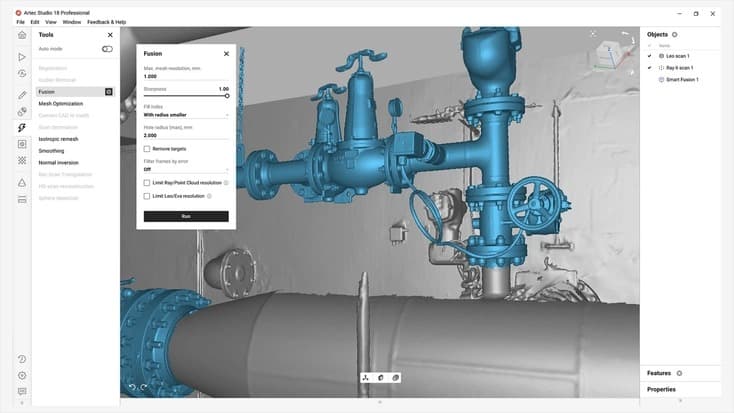
Consider HD Mode in Artec Studio. Enabling it makes it easier to digitize sharp edges and challenging dark, fuzzy, or reflective surfaces. After capture, the built-in Autopilot automates, simplifies, and speeds up many routine steps. Basic inspection tools are already included for quality control specialists.
Although advanced geometric dimensioning and tolerancing (GD&T) analysis still requires specialized software, 3D scanning applications continue to expand every year. This gives devices a longer useful life, keeping them relevant and effective even years after release.
Conclusion
3D scanners offer broad possibilities, from reverse engineering and quality inspection to digital preservation of complex objects. When choosing a scanner, consider operating conditions, accuracy, resolution, range, and ease of use. Only then can you select a solution that fits your needs and integrate the technology effectively into your workflows.
If you are interested in Artec scanners, contact us for advice. We will help you choose a suitable model and explain how to integrate it into your work.