
Top 10 Smartest Buildings
Modern buildings around the world are going beyond architecture by combining AI, the Internet of Things, and renewable energy to create spaces that respond to their occupants…
Smart buildings use intelligent technology to collect data from devices, sensors, systems, and local services, setting new standards for sustainability, efficiency, and comfort. Around the world, modern buildings go beyond architecture by integrating AI, the Internet of Things, and renewable energy to create environments that adapt to occupants’ needs. Here are some of the world’s most innovative smart buildings, showing how engineering is shaping urban living and sustainable development.
10. Taipei 101
- Location
- Taipei, Taiwan
- Owner
- Taipei Financial Center Corporation
- Floors
- 101
- Completed
- 2003
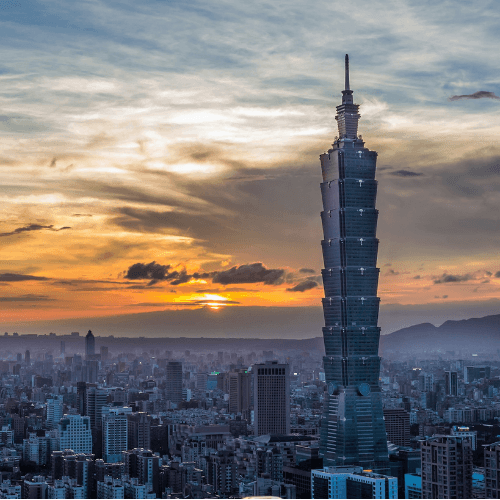
Taipei 101 was the first skyscraper to exceed 500 meters and is the 11th tallest building in the world.
Formerly known as the Taipei World Financial Center, Taipei 101 achieved LEED Platinum certification for operations and maintenance in 2011, making it one of the tallest green buildings. It features energy-efficient lighting, low-flow plumbing fixtures, and an intelligent energy management system.
Water is also conserved throughout Taipei 101 through low-flow fixtures and rainwater harvesting. Its double-skin facade reduces solar heat gain, while air handling systems maintain optimal indoor air quality.
9. Shanghai Tower
- Location
- Shanghai, China
- Owner
- Yeti Construction and Development
- Floors
- 133
- Completed
- 2014
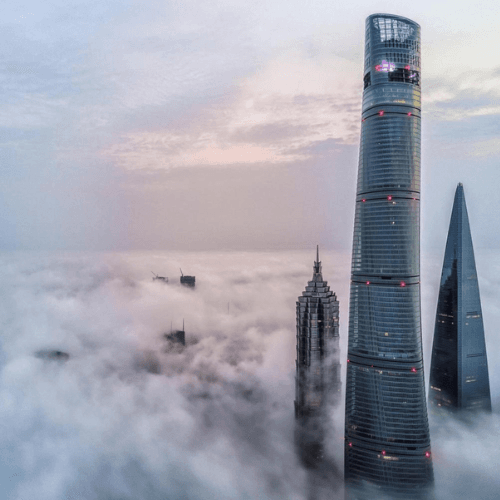
Shanghai Tower demonstrates smart building technology through advanced features. A central energy management system optimizes consumption, while smart sensors monitor and control environmental conditions.
One of four completed “megatall” skyscrapers and home to offices for JPMorgan, Alibaba, and Allianz, it has an outer envelope that admits natural light while reducing the need for air conditioning and energy consumption. The envelope also reduces wind loads, allowing 25% less structural steel than a conventional building of similar height.
High-speed elevators improve efficiency and comfort, while renewable sources such as wind turbines and a cogeneration system contribute to electricity generation. Smart water management and HVAC systems further optimize resource use.
8. Torre Reforma
- Location
- Mexico City, Mexico
- Owner
- Fondo Hexa
- Floors
- 57
- Completed
- 2016
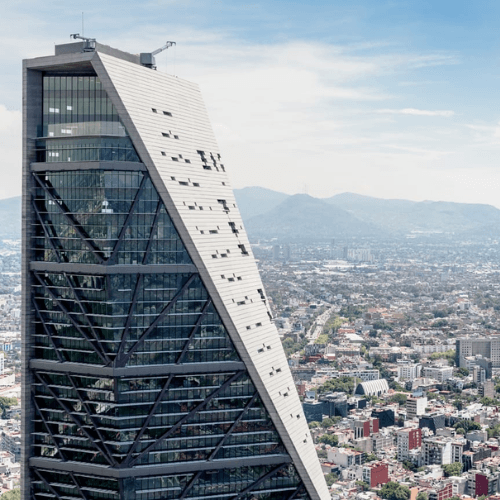
The open-book shape of Mexico City’s Torre Reforma, enclosed by a glass facade, is not merely an aesthetic choice.
Openings in the glass provide natural ventilation, improving air conditioning efficiency and reducing energy use. A central energy management system further optimizes efficiency, helping the building earn LEED Platinum certification.
Torre Reforma also has a water treatment facility that recycles 100% of rainwater and wastewater for use in bathrooms and air conditioning systems.
7. Pasona Urban Farm
- Location
- Tokyo, Japan
- Owner
- Pasona Group
- Floors
- 9
- Completed
- 2010
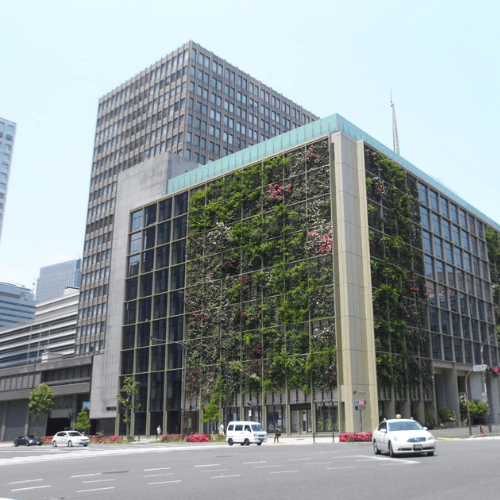
By incorporating urban agriculture, Tokyo’s Pasona Urban Farm takes smart building technology to another level. Its advanced climate-control system monitors and adjusts humidity, temperature, and airflow to optimize occupant comfort and the growth of crops on the building exterior.
A renovated office building houses more than 200 plant species, including fruits, rice, and vegetables, which are harvested and served in its cafeterias. The project combines agriculture, health, and sustainability to promote harmony with nature and resource recycling.
Pasona Urban Farm uses energy-efficient LED, fluorescent, and HEFL lighting to illuminate offices and support plant growth. An automatic irrigation system manages water use efficiently.
The building’s multifunctional approach improves employee well-being, indoor air quality, and sustainable urban farming practices in a corporate setting.
6. City Hall at The Crystal
- Location
- London, England
- Owner
- Greater London Authority
- Floors
- 3
- Completed
- 2012
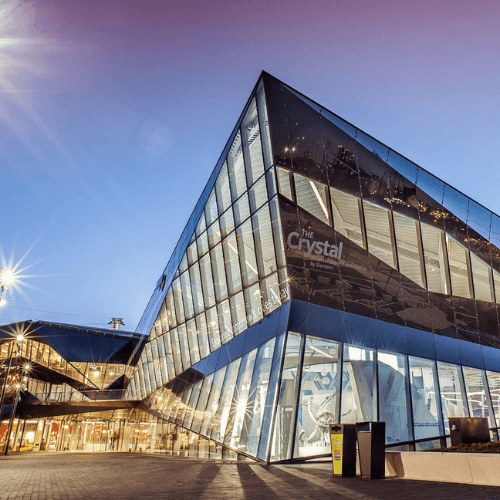
Formerly called The Crystal and opened as an exhibition center for sustainable architectural design, the building now houses the Greater London Authority (GLA), the regional government of Greater London.
Built and opened by Siemens, it was the first building in the world to receive the highest BREEAM sustainability rating, “Outstanding,” as well as LEED Platinum certification for green building.
This is because it features geothermal heat pumps, solar photovoltaic and thermal panels, a 60,000-liter rainwater tank, and carpets made from recycled fishing nets. Its building management system also uses more than 2,500 connected KNX devices for efficiency through automation.
5. Bank of America Tower
- Location
- New York, USA
- Owner
- Bank of America
- Floors
- 55
- Completed
- 2009
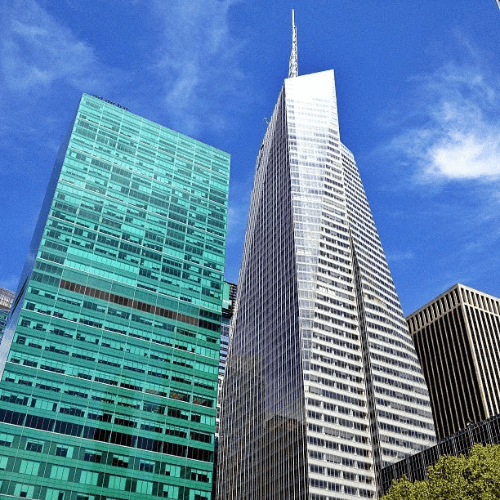
Designed by Cookfox and Adamson Associates, the Bank of America Tower illustrates smart building technology through its SolarwareTM intelligent control system, which tracks the sun and schedules motorized blinds. This optimizes daylight and temperature control.
Despite its size, with 2.1 million square feet of office space, it was the first US commercial skyscraper to earn LEED Platinum certification. Although energy efficiency increased construction costs by 6.5%, the building was expected to save $3 million annually in energy costs and increase productivity by $7 million per year.
Other smart features include an advanced energy management system with on-site generation and cogeneration for efficient heating and cooling. Water-saving measures include waterless urinals and rainwater harvesting, while a green roof improves insulation and biodiversity.
4. Bullitt Centre
- Location
- Seattle, USA
- Owner
- Bullitt Foundation
- Floors
- 6
- Completed
- 2012
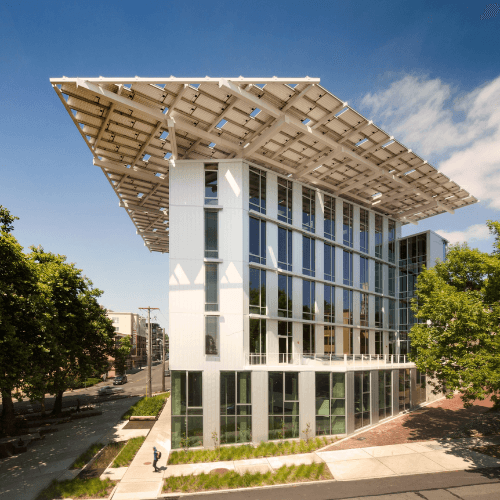
Bullitt Centre showed its commitment to energy efficiency and sustainability from the start: it officially opened on Earth Day in 2013. The building had been designed to be the greenest commercial building in the world.
It has continued to demonstrate this commitment in operation. During its first decade, rooftop solar panels generated 30% more energy than the building used, making it one of the world’s largest net-positive energy buildings.
To discourage driving, the building has no car parking spaces but provides plenty of bicycle parking. It also has 26 geothermal wells extending 120 meters underground to help stabilize temperatures.
3. Bosco Verticale — Vertical Forest
- Location
- Milan, Italy
- Owner
- COIMA
- Floors
- 11
- Completed
- 2012
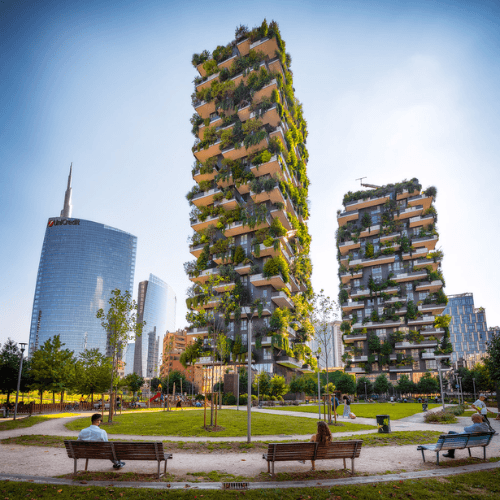
Bosco Verticale means “vertical forest,” and these buildings live up to their name. Designer Stefano Boeri describes them as “a home for trees inhabited by humans.”
The two residential skyscrapers are 116 and 84 meters tall and include an 11-story office building. Their facades support nearly 100 plant species, including tall shrubs and trees.
The buildings contain 20,000 trees and plants that convert approximately 20,000 kg of carbon each year. The vegetation is equivalent to that on one hectare of forest.
Plants are watered by a centralized drip irrigation system using treated graywater generated by the building.
Heat pump technology reduces heating and cooling costs and emissions.
2. One Central Park
- Location
- Sydney, Australia
- Owner
- Frasers Property
- Floors
- 34 and 12
- Completed
- 2013
The mixed-use One Central Park complex consists of two residential towers and a six-level shopping center at their base.
In 2013, the Green Building Council of Australia awarded it a 5-star Green Star rating under “Multi Unit Residential Design v1,” making it Australia’s largest apartment building to receive that rating.
One Central Park’s vertical hanging gardens extend more than 50 meters high, making it home to the world’s tallest vertical garden, with over 35,000 plants growing across 23 green walls.
An innovative cantilevered heliostat system uses motorized mirrors to reflect sunlight into gardens and atriums below, maximizing natural light in shaded areas.
Its advanced water management system includes the world’s largest membrane bioreactor, serving 4,000 residents and more than 15,000 visitors and workers per day.
1. The Edge
- Location
- Amsterdam, Netherlands
- Owner
- Edge
- Floors
- 14
- Completed
- 2014
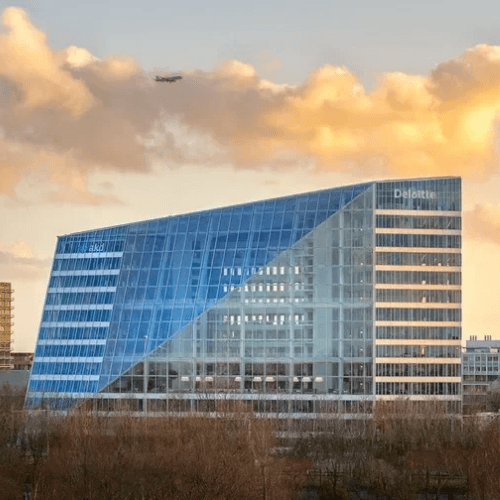
The Edge is one of the world’s most advanced and efficient smart buildings, ranked highly for its exceptional energy performance and integration of advanced technologies.
It received the highest BREEAM score for an office building, 98.36%, largely because it produces more energy than it consumes through an extensive solar panel network and an innovative aquifer thermal energy storage system that efficiently manages heating and cooling.
Home to offices for Deloitte, Salesforce, and Henkel, it has an Ethernet-powered lighting system developed with Philips that is 80% more efficient than conventional lighting. Its 28,000 sensors provide real-time environmental data, optimizing energy use and improving occupant comfort through a smartphone app.
One of the building’s most impressive smart features? A smartphone app that lets coffee machines recognize people and serve their favorite coffee, while also adjusting the temperature and ambience of each room to individual preferences.
source: https://energydigital.com/